Showing posts with label Equality. Show all posts

Friday, February 3, 2012

Pragmatism? Pshaw!

Nancy Brinker built a movement to save lives and honor the memory of her sister. Her idea was simple, "helping women beat the risks of breast cancer is a good." People bought into it and raised tens of millions of dollars.

Somewhere along the line, Nancy Brinker allowed idealogues to divide, and possibly doom her organization. If only for a few days, she turned her back on the poor.

Pragmatism embraces practical solutions without consequences. If you pack a board with people who believe certain things, then they can change the rules, take a vote and end alliances that were crucial to maintaining broad appeal.

In picking funding for Planned Parenthood, or an end run to eliminate it, a faction of the Komen Foundation selected a powerless target. The poor women, very young to premenopausal, who go to clinics offering services at no - to low costs.


Brinker and others did not realize that these women have a reservior of goodwill out here that would not sit silently by as donated dollars were used for exclusive purposes. The money did not come from any one group of people who believe certain ways, it came from lots of people willing to do something for women's health.

The Komen Foundation allowed its intentions and its brand to become  pawns in a political power play. We now live in a time when people, charities and institutions may find themselves offered up for pragmatic reasons. That means that those who would abandon all reason and compromise in favor of any single goal
will roll the dice, consequences be damned.

In this case, they were willing to let poor women, those who lack insurance and generally seek out the only preventive screening and other services within a busline, languish in uncertainty about their health or get sick and die.

There was no talk of alternative care and no true notice that vital breast screening provided at Planned Parenthood would no longer be part of a very fragile safety net.

Pragmatism puts no stake in consequences. It is built on concepts or statements repeated by rote without regard to any waivering thought.

Declare it right, label it just, and disavow anything that falls outside that narrow view. This time it was women and breast screening, last time it was "the poor" and food stamps, or faceless immigrants and a backlash against a 21st century Bracero program.

Pragmatism could lead to protective covenants, discretionary work rules and worse. These are dangerous times, and we should be very concerned about the poor.

 If you are outside the narrow view of pragmatic thought, perhaps you should also be concerned about the rest of us too.


Saturday, January 28, 2012

Play to Win

Some people play politics with a deep understanding of the rules.  They know the differences between what is illegal and just fundamentally immoral.

They are more than happy to mobilize an army of lawyers to defend any and all questionable behavior.  They will vote early by the thousands to be available to watch polling places targeted solely because they are strongholds of their political opposition.  The goal here is voter suppression undertaken under the guise of "discouraging fraud."

There are many other techniques used to reduce participation in elections by many who have the most to lose by staying home.  Challenging the benefits of motor voter laws; Repeating the often wrong idea that convicted felons lose their voting rights forever; phoney flyers and leaflets; misleading robo-calls, and outrageous commercials and ads paid for with soft money from distant SuperPacs.

Then there are the legislative measures designed to carve out political advantages thru redistricting. It often takes years to sort these things out, and in the interim, stays often allow elections to take place "to maintain access to full participation" while the matters are resolved.

A friend suggested recently that we consider registering as independents in large numbers so we could choose unelectable candidates in the opposition's primary.  While that is legal, it is also under the heading of dirty tricks.

Richard Nixon manipulated an election 40 years ago.  12 years ago, lawyers found allies in the Florida courts and we wound up with eight years of Bizarre World non-leadership.

In 2012, you can bet that every tactic listed above will be used by candidates and their supporters committed to winning at any costs.

More than one million black men of voting age, perhaps eight percent of the population have been removed from the coting roles due to felony convictions.  What many do not know is that once they serve their time and complete any court ordered supervision, they could be eligible to have their voting rights restored. Challenged by poll watchers and election judges.

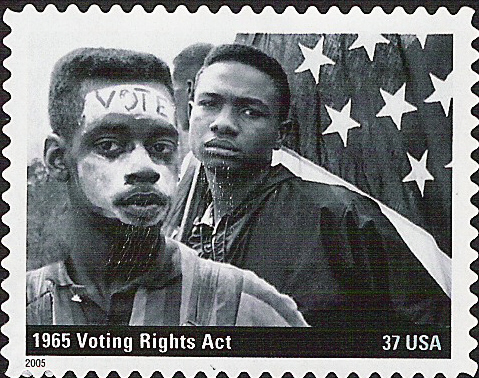
I'm very sensitive about voting rights. Perhaps it is because I remember relatives who could not vote because of poll taxes, literacy tests and other games that were totally legal before 1964, and survived out in the countryside into well into the 1970s.

Because I am pushing 60, I expect my generation to show some guidance and leadership on this issue. We remember the fight for voting rights firsthand. many of us went to college or spent time in military service in areas where we could not vote locally. We also know first-hand the dangers of having no political power in places where we have to survive.

So, giving some thought to the dangers of dirty tricks, I've got a few suggestions:

1) Talk often to anyone and everyone above the age of 17 about the importance of being registered to vote in time for the primaries in your state, or at least in time for the general election.

2) Understand the rules for franchise reinstatement in your state, and be able to explain them to any friend, relative, or runnin' dawg of your children or grandchildren's who may have had a fall in the past and may not know they could be eligible to have their voting rights restored.

3) Stick voter registration cards (available in most libraries, every department of motor vehicles office, and at your city hall and county courthouse) in the glove compartment or console of every vehicle you own, pay insurance on, or make the payments for. Ladies, get in the habit of carrying a dozen in your purse and men, stick three or four in your pocket because you never know when someone might need one.

4) Talk about politics as much as you talk about sports, reality T-V shows, the latest jam, or who's got the best deal on purses or hair. If you've got a church family, and your pastor is not active in civic affairs, talk about politics over social dinners. Commit to getting people fired up about local, national and world affairs one at a time, and touch different people each week or month to make a difference.

Even if you know you can count on them to vote for your presidential candidate, tell them who is running for Congress or your state legislative district. Tell them why they deserve your votes and tell them why the other guy could cause problems for their families and your neighborhood.

5) Don't accept the negative: Even if you do not say "all politicians are crooks, they are all crooks." Remember that can become an excuse for tuning out the whole process.

We know and remember so many people who voted for bigots and even campaigned for candidates they knew would do absolutely nothing to make their lives better. They did all of that because they knew there were even worse bigots and insensitive SOBs laying in the cut trying to seize as much power as possible.

Family members we respected cast their ballots holding our hands in the voting booths and never talked about the weaknesses of the people they voted for. They did it out of hope for better futures for us and our children. Many of us have known politicians who are not crooks. Consider the danger of accepting the fallacy that they all are.

6) Volunteer: You don't have to walk, or even show up at a phone bank anymore. Commit to sending a dozen e-mails, pass on an issues paper, or spend a few minutes talking to a grandchild and their friends about the importance of participation. Do any of those things and you can chalk them up to honoring the generations that fought and died to make those things possible. 

A friend says I live and breathe politics. That's not exactly true. For many years I dealt with politics as a trained observer. While people speak about the "liberal media," I can tell you that there are thousands of professionals covering politics every day who check their personal opinions at the door each day before they do their jobs. It is never easy, but their livelihoods depend upon watching and listening and reporting only what they observe without shading it in any direction.

I can tell you that lots of dumb things happen during political campaigns. Still, most newspeople do not go out of their ways to derail anybody's aspirations for high office.  I do not live and breathe politics. I just have a good idea of what can happen when people tune out, or fail to tune in early enough to really make a difference.


Monday, January 23, 2012

A Generation of Anger

I could have called this column "Why They're Pissed Off."

Basic stump speeches talk about how candidates will help the nation return to American values. Those speeches often embrace themes of how we have gotten away from the Constitution and what the founding fathers intended. They continue to blame most of the problems in the country on so-called radical deviations from the "American way of life."

I had an exchange recently with someone who assured me that an ancestor of theirs was really a Republican, even though he was elected governor of a great state as a Democrat. He told me the guy was only a Democrat because Republicans could not get elected in that state back then.

History is a wonderful thing. You can actually look back and give context to a lot of attitudes that exists decades or generations later.

There was a time, after the Civil War, when most voters in the 11 states that made of the Confederacy were Democrats. They stayed Democrats for decades because they blamed Republicans and Abraham Lincoln for changing the way of life of their most privileged friends.

One hundred years later, Lyndon Johnson changed their way of life with the stroke of a pen.  What Johnson, the Texas Democrat, did was sign the Civil Rights Act of 1964. But getting to the point where he had that option was not easy. It took months of negotiation, weeks of debate, and a lot of public attention to make that happen.

The one time that Malcolm X and Martin Luther King, Jr. ever met face to face was March 26, 1964. They were in the gallery of the Senate Chamber of the U.S. Capitol to observe the Senate debate of the Civil Rights Act. A Democrat named Robert Byrd of West Virginia unsuccessfully had filibustered to block the vote.

When the final votes were tallied, the Democrats in the House voted 153 to 91 and Republicans voted 136 to 35 for passage. In the Senate, the vote was 44 to 23 for the Democrats and 23 to six for the Republicans.

President Johnson said on July 2, 1964 that American values made passage inevitable. It also cleared the way for a raft of changes that many people believe made America stronger. While passage of laws and inaction of regulations set standards for compliance, working toward institutional change and overcoming generations of injustice has been a constant struggle ever since.

In 1967, older and younger workers gained protections  under the Age Discrimination in Employment Act. Provisions of that law helped protect members of the World War II generation from upstart Baby Boomers as they reached the ends of their working lives.

In 1975, Congress passed the Sex Discrimination Act, and within 20 years or so, the game of grab ass became politically incorrect in the workplace. Seventeen years later, women of every age and every description and some men still have to struggle against workplace harassment and disparate treatment.

In 1978, the Ethics in Government Act passed and with the help of the federal courts, government workers gained a variety of protections designed to give them the same protections available to those in the private sector.

These were followed by the Americans with Disabilities Act  and the Native American Graves Protection and Repatriation Act in 1990. Those laws gave disabled people access to jobs and facilities that most Americans continue to take for granted and made it illegal to just pick up the bones and belongings of long dead people who were here in ancient times.

When people rail about what's wrong with America and talk about the special interests who have ruined the country and radically changed what the founding fathers created as a perfect ideal, what are they really saying?

If you listen to the words of President Johnson from July 2, 1964, they are are speaking out against measures taken as America and its people evolved. Johnson and Congress, both Republicans and Democrats saw that they nation had to evolve. The promise of America had to grow closer to the literal meanings of the Constitution.

If you really think about it, the anger that has built up over 48 years and intensified over the election of a mixed-race president, could be based upon the changes that have occurred in since 1964. People passionate about rolling back the clock recall hearing about how much better things were "in the good old days."

 
The problem with that is context? Who reaped the benefits of a time when so many Americans were considered socially, sexually, racially and physically outside the concerns of a privileged few.


Saturday, January 14, 2012

Think About Us

The United States is an evolving idea. If you think about it, it has always been that way.

Lately I have been thinking about the Equal Protection clause of the Constitution. Even if the people who founded this country could not bring themselves to accept the concept that all men were truly equal, Congress eventually got around to it.
Civil Rights are Human Rights

After a bloody civil war, the 14th amendment became part of the law of the land. It opened the way for many things that made a difference in America for the next 150 years.

Great men and women think about the big picture. They consider not only the value of the change they help bring to themselves, but also the way those changes will affect future generations.

My wife and I spent  Jan. 14 on the National Mall, in Washington, D.C.  It's funny, but sandwiched between the Jefferson and Lincoln Memorials are two monuments to great thinkers and visionary men of the 20th Century.

Franklin Delano Roosevelt was the 32nd president of the United States. Rev. Martin Luther King was a human rights activist.  Their monuments capture their times, but they also point toward hopeful images of a world that most people in their times could not have imagined.
Words of Franklin Delano Roosevelt

Roosevelt was perhaps the greatest disabled person in U.S. history. He was a friend to Helen Keller and a founder of the March of Dimes. He believed this was a country that could harness the strengths of all its people.

Martin Luther King, spoke out for peace, economic justice, and universal opportunity.. Quotes on their Memorial walls speak not of "those people," but of "all people".  They point to the tragedy of empathy and the pain shared by all who suffer injustice.


Words of Martin Luther King
Some people consider the MLK Holiday, just a black holiday. When you think about it, every law enacted in response to the civil rights movement of the past century has been blind to race, ethnicity, age, gender, religion, age, disability and even sexual orientation.

The late congressman George "Mickey" Leland, D-Texas, was fond of saying that "America is a promise. It is not what the country has been or what it is now, but what we all work to make it in the future."

Over months and years, and decades, we continue to work to make it better. I wrote this week that "
Nothing makes a person change their mind about civil rights protections more quickly than reaching a point in life when theirs are violated."

It seems that when one winds up on the receiving end of institutionalized unfairness, their views on right and wrong often begin to resemble those of people who've fought the battles of the habitually or consistently oppressed.

The message I brought away from a day of walking through January's cold and looking at words from men who knew nothing of the 21st Century was that in the end, it is not about "us against them," it is really "all about us."