Showing posts with label History. Show all posts

Thursday, March 22, 2012

Short List

Let's see, can I say what I think needs to be said in a few short lines?

Presidential wannabes are on the stump selling their vision of an America that once existed:

Women were wives or worked toward being wives and let their husbands and fathers make most decisions.

Racial and ethnic minorities knew "their place" and understood that if they stepped beyond it, no one would be there to keep the punishing rabble away.

The handicapped and disabled sold pencils, made mops, and accepted that because they were different, their needs could not be accommodated.

Those "other religions" were just not something we had to deal with in this country, because we weren't like that.

And people who lived "like that" just kept it quiet and acted like the rest of us when they came around decent people.

The candidates may promise to put "America back the way it was,"  but the genie is out of the bottle.

Making America better is not stepping back to any of the above.

There, less than 200 words.


Sunday, March 18, 2012

Whimsical Worrisome Words


I grew up opposing racism, because I was born in a country that had not come to grips with its own issues about race.

I have been blessed with daughters and granddaughters and wanting the best for them, I speak out against sexism.

As I have gotten older, and seen people of the baby boom generation pushed to the sides in the name of progress, I have become sensitive to agism.

Various  isms are used to divide, desensitize and compartmentalize people. Some people bank on the premise that if you are not part of a group under attack or subject to ridicule, you will not care about such things or might even join in.

I thought long and hard about what I could write about the bumper sticker campaign that attempts to twist the "N-word" in a free-speech protected statement against President Obama's reelection effort.

It has already been labeled racist, but I think it is just a symptom of a broader backlash of bigotry being embraced for political reasons.


There are some who would harness the collective anger of individuals who have somehow convinced themselves that a coalition of formerly underprivileged or disadvantaged classes are out to take away their rights.

If you do not enjoy the same institutionalized advantages that your father or grandfather enjoyed, then you might consider attempts to equalize the rights others as a reduction of your own.

The bumper sticker flap from March 15 triggered some interesting comments, particularly as some people I know tried to get others to at least admit the bumper sticker, the idea behind it and the language used as racist.  They included two responses from the same guy, whom I know is a broadcaster in Texas:

"Ever since 2004, the prevailing sick reasoning is that it's some kind of crime to be a conservative. And we "allow" it by not fighting back." He also said "The thing that bothers me most is this constant barrage from the Left that conservatives are "racist". And yet, I've never seen a more racist person than Al Sharpton. No one calls him on it. He gets the proverbial free pass from the MSM."

I am not clear about the motivation for this feeling of "persecution" as it was put to me. But I have heard it before. It strikes me that this unapologetic conservative is willing to defend the promotion of various isms, by what he perceives as acceptance of isms by the so-called mainstream media and by inference a broader society hell-bent on destroying conservatism.

Could that be just excuse to buy into bigotry?  It's funny that just a few decades after America laughed at the outdated bigotry of Archie Bunker and George Jefferson on popular  TV sitcoms, we now have the far less funny  nastiness of Talk Radio.

The things heard daily on the air provide the angry with outlets to buy into bigotry they that don't get much anymore.


Most people don't go around using words like "honey, baby or sweetie" on the job because they are considered sexist.  Uttering various ethnic, or racial labels that were once commonly heard on the streets of most cities can carry perilous consequences. It is considered tasteless to refer to the physically or mentally challenged as "cripples" or "retards"  today.

 There are now sections in a lot of school systems "codes of student conduct" that make use of many of these terms grounds for discipline.

At many jobs there are policies in place that recognize that such language can create an uncomfortable work environment. People who say them or display them are likely to hear from the boss, the human resources department, or attorneys representing an offended party pretty quickly.

Discouragement of use of the "N-word" is something something some of us have worked for in recent years. These days, we are seeing a backlash from those who likely once used such terms without consequence.
Some smirk smugly through their denials of racism, sexism and xenophobic commentaries.

No matter how often they smile and say "I am not a racist," or "I am not a sexist," or "I am not an agist," the realities of their words, and the tolerance and acceptance of the sentiments means they may be a bigot.

The question is, who will they dislike next, and is that something most of us want to easily accept?


Tuesday, March 13, 2012

Misdirected Anger

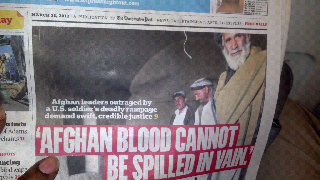
The deaths of 16 Afghan villagers was a tragedy.  That it allegedly occurred at the hands of an American soldier is unfortunate. 

Sad things happen in war, and military doctors and judge advocate office investigators will sort through the reasons why. 

Still, the disturbing backlash of violence now being blamed upon this isolated act is every bit as tragic.

In Afghanistan, Iraq, Pakistan, Libya, Israel, Lebanon, Kenya, France,Turkey, the United Kingdom, Uzbekistan and the United States, terrorist violence has repeatedly been used as a political weapon.  

It moves well beyond the limits of "by any means necessary" to the senseless slaughter of innocents.  Victimizing  civilian populations for political gain is a strategy worthy of universal condemnation.  

NATO and the United States have had successes building alliances with locals willing to hunt down killers who use terror as tools of death and fear. Collateral damage should not be an acceptable means of bringing about change.

The vocal indignation registered by those led would rule Afghanistan is meaningless. They have had years to step and and take control of their country, but corruption and graft have kept them from reaching that goal. Silk robes and posturing politics do not represent power to a people still waiting for basic services.

If the American soldier allegedly involved turns out to be responsible for the killings, he will face justice before a U.S. military tribunal. International security forces maintain the right to discipline their own.

Once the Afghans can handle the security of their own cities, villages and their entire country, they will have the right to subject foreign nationals to justice in their own courts.  For now, that is not only impossible, it is out out of the question.

Universal condemnation of terrorism, and no quarter for those who would target the powerless represents a course that leads toward a more peaceful world.To not negotiate with terrorists is no longer enough.

The threat they represent is ample enough to warrant pre-emptive actions.  It is  why the drones of the United States are armed and continue to strike when intelligence warrants a deserving target. It is a foreign policy approach that is paying dividends. Others in the world should adopt that approach. 


Wednesday, February 29, 2012

A More Perfect Union

Before the American Revolution people on the colonies would speak of the rights of Englishmen.

The great leap the founding fathers were willing to make with the U.S. Constitution was support of a paternalistic system that did not deem property as the great legitamizer for voting and other privileges.

Germans, Scots, some French, free Africans and varied people of mixed races gained their rights by helping to create this nation.

Still, it took more than a century for women to constitutionally evolve to full personhood. It has taken twice as long for various ethnic, racial, religious and immigrant minorities to approach that status, and for many, it remains an elusive goal.

You do not hear many people who appreciate egalitarian ideals talking about class struggles, reigning in the courts, or restrictions of hard fought and hard won rights.  People who remember being ignored, structurally underserved, and socially subordinated to the privileged do not look back on those times fondly.

The Irish rose out of their service in the Civil War. Women gained theirs through suffrage movements over 50 years, and grew it through liberating actions of the 20th Century. Italians and various Eastern Europeans emerged from  two World Wars with a bit more of it. Jews gained it through horror, hardship and determination.

Negros who became African-Americans and then just black, native Americans from Florida to Texas and New York to Alaska, Asian and Latin American immigrants and the disabled are still fighting for the incremental gains that lead to it. As are those of  those of nontraditional sexual orientations.

I'm talking about the basic right to be an American. It represents full citizenship .The total sum of rights and privileges that add up to no one attempting to limit your opportunities based upon bigotry, professed gender superiority, or other absurd traditions.

If what once was, conceptually represents something unfair, that should never be resurrected.

I cannot imagine my daughters or granddaughters living under the system my mother or grandmothers were forced to accept.  I do not want any of my young people, male or female,  to work in an economy where standing is determined by color, familial relationships or social association.

I won't embrace a time when contraception availability was a political or religious choice decided almost exclusively by men.

So-called social conservatives often speak of returning the nation to how it once was.  What they seem to desire is a vision of America where the will of a fortunate few is foisted on the many.

America's freedoms continue to evolve. Looking backward to a romanticized past does not mean more freedoms for all. Instead, it is a false hopes that somehow, conforming to the visions of a privileged few.

Anyone who thinks back to the pain of those who had to fight for rights and basic freedoms cannot possibly embrace that vision. America moves ahead and gets better as it evolves, those who long for the past want something that is not good for the rest of us.

Policies and  laws limiting any of us, deprive each and every one of us.That is the true and real threat to our freedoms and our democracy. It is not about returning America to anything it once was, it is really about a future no freedom loving person in their rational mind could ever truly want for themselves or for anyone else.


Thursday, February 23, 2012

Tippin' My Hat- Because I Can

I've lived a lot of places and done a lot of things. But only close family and old friends from the 70s, 80s and 90s know much about my cowboy period.

Fact is, even though  I am from Cleveland, I am Houston Proud. For nearly 20 years, every February I lived for rodeo time.  It wasn't really about jeans, or hats, or boots or buckles, it was about fun, history and tradition.

Over the years, I learned to ride, rope, cut cattle and even had a few experiences with branding and making steers. I still miss Texas every day.

Even though the times were different I made a lot of good friends there. We worked and played together, drank a lot of longnecks and boosted bourbon  to Willie, Waylon, Johnny Cash, Al Downing, O.C. Smith  and Charlie Pride. We bought auction cattle and livestock pens in the Super sales Sales Salon and laughed at city folks whose boots were so new they didn't crease.

I've been in Washington now for nearly as long as I was in Houston. Yet, in February, I still think about trailrides, mesquite smoked barbecue, morning coffee sweetened with a winter's morning rain, and tight jeans, cowboy hats and pickup trucks.

So, for all my Go-Texan Committee friends: Andy Hudack, Clint Wright, Chuck Wolf, Joe Ladd, Bill Bailey, Pam Ivey and all the rest. When the barbecue judging starts and the carnival kicks off, or the riders form up for a quick cantor up South Main, remember you know one real cowboy in the nation's capital who still wants to play.

It's February in the Bayou City and this ain't no Mardis Gras, this is the the biggest show this side of the Calgary Stampede.... It's time, Let's Rodeo!

Sunday, February 19, 2012

Why Hate the Government?

Society needs its institutions. There are families,churches,  tribes, towns, cities, states, countries and more. None of those institutions are perfect. People who believe in them work to make them better.

Dissatisfaction with an institution does does not mean it cannot be improved, but few improvements come overnight. You push, prod, inch and drag what is good about it toward something better.  That's one of the reasons the United States has continued to evolve over more than 200 years.

People have looked at where the nation was in their times and worked to make it better. Some of the things that government has done include:

1) Identifying and promoting better farming practices so that the land, crops and livestock we depend upon to feed our families will be able to do the same for future generations. That solved the erosion problems that devastated farm families in the 1920s and 1930s. It also led to the banning of D-D-T and other chemicals that nearly killed off dozens of species in the interests of increasing yields.

2) Beating diseases like smallpox, yellow fever and polio. While private pharmaceutical companies will do some research, coming up with ways to manage, prevent or cure the most crippling diseases has always taken a combination of public institutional research, private sector investment and a good dose of government cash to produce results.

3) Providing basic minimum standards of education critical to the nation's defense, economic competitiveness, and basic cultural identification of what it means to be an American.  While local and state control may be important, sharing concepts on a national scale does play a tremendous role in making sure that people have some basic similarities when they need to function as a unit representing America.

4) Tying the country together so that people from coast to coast, and even in flyover country have access to the same goods, the same technology, and the same services. If you go to certain parts of the eastern United States, you will still find remnants of private  pikes, canals and railways that served portions of a state or region, but withered  because they did not connect to merchants to markets they needed to serve.

5)  Building codes and other safety safety and health standards. If the free market was always the best option, we would still be using leaded gasoline in our vehicles and asbestos in our floor coverings and break linings and lead paint in our homes. The government, through Congress, exercising the will of the people, has brought us many standards that have helped to create a standard of living unrivaled in much of the world.

6) If people were always fair and honest, we would not need to be concerned about human rights. But people have a weakness for acting in their own individual self interests. When people at the local or state level pass ordinances, adopt policies or enact laws that result in institutional unfairness,  government has an obligation to intervene. This is the United States of America so "if you don't like it, move" is just not an option.

So, when people go on the stump and start talking about how government has abandoned or is ignoring the people, they are pandering. In most cases, they do not suggest ways of making government better. Instead they harken to a past time when government was not doing its best by all of its people.

Talk of restoring the nation to its freedoms does not mean the same thing to all people. If you are disabled, elderly, female, an ethnic or racial minority or live outside of the social norm, it could mean a return to exclusions, restrictions or persecutions.

All of these things are part of America's past, yet even now, there are movements to eliminate or minimize their significance in the text books used in the nation's public schools. There are no perfect institutions, like families, countries do not always treat all of their children the same. And like people, acknowledging flaws and working to get better makes any institution stronger.

Don't hate the government or the courts for encouraging change. In the end, only change will make the nation stronger.

Wednesday, February 15, 2012

Political Change

Political change is never easy.  Sometimes there are so-called velvet revolutions where the people in power weigh the risks and simply decide to get out of the way. 

But more times than not, there are demonstrations and protests, followed by riot, terrorist attacks, assassinations and then ultimately, full blown rebellions, revolutions or civil wars.  Add sectarian violence to the mix and you have the chaos that most often brings about significant change. 

A year ago, we had the Arab Spring.  While some longtime leaders fled or accepted house arrest, others fought on, only to face retribution sparked by the anger of their persecuted subjects. 

No one knows how things will play out in Syria.  Bashar Assad is not his father, even if he uses the same tactics.  Whether he can quell a restive population and avoid ouster remains to be seen. 

What other Arab countries are willing to do for the people could influence the outcome, but it could also come down to how many Arab fighters from more than a score of nations opt to join the fray. 
 
In Iran, the Persians in power have their own problems.  Besides a young population weary of the stifling rules of the ayatollahs, there are also outside pressures designed to destabilize the aging regime.The Islamic Revolution was a long time ago, and even still, there are a lot of Iranians inside the country and abroad who wouldn't mind a good dose of western culture. 

In the emirates and kingdoms, there are calls for democracy, women's rights and economic opportunities.  The ruling powerful are rich, but many of the people do not share in the oil and mineral wealth of their countries and are facing high prices and shortages of basic goods. 

When you think about the early years of any nation created or rebuilt following political upheavals the images are the same. Struggle, euphoria, thoughtful efforts at lawmaking, disastisfaction, disillusionment, conflict, destruction, and reconstruction.

In Western Asia, there are nations in varied states of getting there. With so many outcomes now uncertain watchingm waiting and deciding later who to help makes an awful lot of sense.    

Tuesday, February 14, 2012

One Dangerous World

War, terrorism, political famines, acts of God and random crimes. We live in a very dangerous world.

But even if we have to be on guard, most of us still try to live.

No one can know when they could get caught up in events where their very survival will be on the line.

You can drive defensively ans still be involved in a crash; you can eyeball all 150 people who board a crowded train car and still become a victim of collateral damage when and if something happens; you cannot make a storm change course by the force of your will.

But you can decide to live without fear.

For most of my young life I knew governments, the United States, the Soviet Union and others, could blow up the world.

Today the talk about limited nuclear war. Some extremely well armed countries are dealing with internal strife that could spiral into civil wars.

Who ultimately will control their weapons or keep up with their technology is anybody's guess.

We live in a very dangerous world, and while I may think about it, I am much too busy living life to worry about all the possibilities. 

Perhaps we will be here to see tomorrow, but maybe not.

Monday, February 13, 2012

One More for the Team

President Obama's reelection campaign will need a lot of volunteers.  

Some will be involved in get-out-the-vote efforts, others will dedicate their time to fundraising. But tens of thousands will be use their talents to support the Truth Team. 

The campaign wants to recruit as many as two million people to pursue a single goal: combatting the misinformation pushed out consistently by the opposition.

"People don't just want tl hear from campaign statements ans ads-- they want to hear from family and friends they trust," said Stephanie Cutler, deputy campaign manager for Obama for America. 

This sounds like the kind of volunteer work I might enjoy.  You sign up online and then start joining the effort to stamp out bull _hit. 

The team will be divided into three parts.  Each unit will have its own Web portal: 

Attackwatch.com will combat basic and over the top nastiness:

KeepGOPHonest.com will challenge Republicans who lie about their records;

And KeepHisWord.com will promote the president's record. 

All of this is necessary because the opposition is willing to say and do anything to win the Whitehouse, retake the Senate and keep control of the House. 

One thing I've learned, over the years, is that you do not edit the president. Once an individual is elected leader of the free world, what he says, everything he says, is a matter of public record.

Honest communicators to not paraphrase, distort or mislead their readers or their audiences with words presidents have not or do not say. When the quotes are available, they simply provide the quotes and let the readers or their audiences form their own conclusions.

Since all sorts of positions, policies and statements are routinely attached to the president and repeated as though they were facts, the need for a Truth Team is obvious.  I think it's a very good idea. I wish them well.


Sunday, February 12, 2012

What Exactly Do They Mean

There are huge differences between fiscal conservatives and social conservatives.

Fiscal conservatives often whine about domestic spending.  Public education, taxpayer supported health care, job training and economic development are generally bad ideas.

Social conservatives talk a lot about freedoms even as they try to force their views on the rest of us.

They want to peek inside your doctor's office and dictate what services you can get.  They want to put certain material into the classrooms and revise textbooks to eliminate realities they find objectionable.  They want to look into your bedroom and tell you who and how to love. 

Some of those desires may seem peculiar or invasive, even to people who live really dull lives.  But social conservatives are scary for other reasons.

All this talk about returning America to the values that the founding fathers intended. They draw their loudest applause when they talk about restoring, not creating, freedoms we've enjoyed in the past. They contend these things were never intended by the founding fathers.


They insist they love the U.S. Constitution, yet they object or condemn some of its most wonderful tenets.  They consider the role of the federal judiciary, by its very mandate, charged with interpreting the constitutionality of federal laws, reactionary and warranting restrictions and greater controls.


The question numerous pieces of legislation designed to ensure constitutional protections for all parties, both citizen and visitor. And they lament actions taken by Congress and affirmed by majorities of the legislatures of the states which alter the laws of the land and grow our Constitution as a living document.

When they talk about returning the nation to some unidentified past, what do they they really mean? Could it be they want a time when most if not all supervisors and people of power were white and male?

Are they seeking a time when women of any color or nationality had no real power and even their rights to property were based upon the whims of their fathers or husbands? Do they long for a time when immigrants, documented or not, were subject to exploitation and had few opportunities to seek relief in the courts?


Perhaps they wish to return to those times when law abiding people of varied backgrounds could be denied their franchise or dispossessed because of their race, gender, ethnic origin, religion, physical impairment or sexual orientation?


The danger here is that no one ever really explains what they mean when people considered the most promising conservative politicians start waxing nostalgically about the values of the past.  That's scary!

Opportunity in America is far less exclusive than it was even a few short years, and definitely a couple of decades ago. What may be the good old days for some seems like a return to a past with limited choices for a heck of a lot of Americans.

Saturday, February 11, 2012

A Sweet Voice Stilled

Whitney Houston, a songstress born to one of the most talented families on American music, died Saturday in Beverly Hills, Calif. She was 48.

Houston, whose career included numerous gold records, a starring role in an iconic dramatic musical, numerous Grammy Awards, Emmys and American Music Awards had a troubled past marred by drugs, volatile relationships and suspected domestic violence.

The daughter of 70s R&B artist, Cissy Houston, who later became a top Gospel performer, Whitney Houston was also the cousin of Dionne Warwick and her late sister, Dee Dee, and the goddaughter of Aretha Franklin.

Formerly married to Bobby Brown, she self-parodied her life in a reality television show entitled "Being Bobby Brown" in 2005. 

The cause of death and the details of her final days will be investigated by police and reported for days to come.

Hours after her death, legendary music producer, Clive Davis, hosted his annual pre-Grammy  party, at which Houston had been expected to perform.

"Whitney would have wanted the music to go on, and her family asked that we carry on," Davis told his guests.

Alicia Keys, Sean Combs, Tony Bennett, the Kinks and others honored the singer's memory with words and songs.

For now, I choose to remember a world class talent. Like so many great artists, she has gone before her time. The flaws of her life and her personal demons do not diminish her talent.


Whitney Houston made music, her songs brought joy and made many little girls, grown women and sweet men want to hit and hold high notes.  Like Billie Holiday, Van Morrison, Mama Cass, Jimi Hendrix, John Belushi, Richard Pryor and Kurt Cobain, remember her for her art, and not her final act.


Thursday, February 9, 2012

Sweet Memories

 Baby Boomers have lost a bit of their childhood. City, country, North or South, some things are part of our collective memory, and Nello Ferrara had a lot to do with that.

You may not know the name, but on the side of little boxes that likely were among the first things we ever purchased for ourselves, was the name Ferrara Pan Candy Co. If you still do not know what I am talking about, think Lemonheads, Atomic Fireballs, Redhots, or Boston Baked Beans.

Nello Ferrara passed away at his home outside of Chicago , Feb. 3.  He was 93.  It was Ferrara who led the company that came up each of these products. Some of them date back to the 1930s, and were enjoyed by the Great Depression era kids, when they were probably a penny for a little square of paper tied with a string.

He developed Atomic Fireballs after serving in Post War Japan. 

We all had our favorites. We bought the nickel boxes, looked for them inside the candy counter of the Saturday matinee, and wished without hope that the Easter Bunny would bring them instead of those ordinary Jelly Beans.

They became our comfort foods... Not something healthy our moms, aunts or grandmothers made, but something we bought from the first people we did business with using money out of our own pockets.

Even today, some of us will keep a few around. We will fib and say "they are for the grandchildren" but we have moments when we will put three or five or ei in our mouths and savor memories from childhoods that ended long ago.

Nello Ferrara made our lives sweeter. The candies he invented and the names he kept alive still make us smile. 

The one thing I remember most, is that they always did and always will taste better than that Brach's s--t!


Wednesday, February 8, 2012

Overlooked Tragedies

When I write these days, it is often as an old man. I have seen a lot of life, up close and personal. I still know a lot of people who run toward danger when most folks are running away.

This year, there is an awful lot of talk about things government should and should not be doing for people. When you are sitting around in a suit and tie or walking into some climate controlled assembly hall, it is easy to talk about people doing things for themselves.

When you've been places where even the strongest and the best are challenged to do for themselves, you learn things about people.

That was the chaos that followed Hurricane Katrina in 2005. People literally saw everything they owned washed away. Cars, houses, clothing, everything.

The aftermath of that tragedy puts the lie to liberterian ideals. One cannot expect government to do the minimum in times when many people are exhausted and have only God and their last strength to fall back on.

When you see despair in people's faces, and total surrender in the faces of the old and sick, civilized people look to authority for providence and benevolence. If government is to have any authority at all, it must be ready and able to step in with material aid when God may want men and women to depend upon each other.

In 2005, government was more than a wee bit late. The private sector cut its losses and looked to insurance companies to make them whole, and tens of thousands of people looked to government for help.

Believe me, it was chaos, not just in Lousiana, but across the country. Lots of people who had nothing spent their last change to make calls for help. After fumbling the call, the government dispatched a lot of debit cards, wrote a lot of checks and made a lot of direct deposits.

In the chaos, lots of money changed hands and some of it needed to be sorted out later.

Well, after seven years, it has been sorted out, Some people-- no, tens of thousands of people owe thousands of dollars. They are not crooks. They were people up against it. In a time of chaos they took the aid they were offered and took as much of the aid as they could possibly get.

Today, the Federal Emergency Management Agency announced that those who owe less than about $4,300
will have their debts waived. Yes it is taxpayer's money, but it is money that even after seven years, many of the victims, have not seen since.


In many ways, what happened with natural disasters in 2005, set the stage for the economic disaster that began two years later. The government was again, asleep at the switch, At a time when people needed and looked toward authority for help and guidance, some good people were silent.

Now, we need them all to care and understand.


Monday, February 6, 2012

Gradual Shakeout

We already know the Democratic presidential candidate will run on his record.     

 The Great Recession ended under his watch, and despite congressional gridlock, the nation's economy is slowly turning around.

Whether the incumbent is opposed by Mitt or Newt, we will hear loads of promises about job creation, lower taxes and increased opportunity. The problem with that is neither has a track record of making that happen.

Selling off the assets of floundering companies may create limited profits, but it does not put people back to work.Instead, people with jobs are declared surplus, and the machines they used to run to turn out products are shipped abroad for use in sweat shops.

Deregulation that makes outsourcing easier takes away the incentives for domestic growth as quickly as raising taxes.  Contract workers cost about one-third less than permanent staffers and have none of the protections of employees.

Luckily, private sector job creation  is up, and first time unemployment claims are down. All the negative ads and campaign talking points in the world cannot change reality.

Saturday, February 4, 2012

Against Their Interests

 "History repeats itself." That adage is familiar to most of us. It can often explain why people who otherwise should have "no dog in a fight" will risk everything they have by taking up a cause that is not their own.

Terms like "class struggle" and "politics of envy" are being used to paint a curious picture of the wealthiest Americans as victims of some unfair conspiracy designed to strip them of their hard-earned riches.

The logic is that "fair-minded people" will see this as a great crusade to redistribute their wealth and rally to their aid by voting for candidates who won't allow such injustices to occur.

The way the last few years have shaken out, we have expanding poverty and we also have expanding wealth. While the number of poor in this country has grown, the richest Americans have seen their net worth expand.

In the center, is the so-called middle class. Most statistics indicate that they have lost ground. Some of them have slipped back into poverty and others have hung on, marking time and hanging tough against the battering waves of  economic  turbulence.


America has been this way before. History tells us that the Civil War nearly destroyed the union. Ninety years after the birth of the nation, more than 618,000 people died in four bloody years of fighting. Slavery and economics were central causes, and rhetoric about states rights fanned the flames and passions between North and South.

Yet, only 7 percent of southerners owned slaves in 1860. That slave owning class represented perhaps one or two percent of the total population of  the nation. Still millions marched off to war willing do die to defend the rights of a very exclusive club.

Now, as then, we have inflammatory rhetoric, enraged passions, and dramatic struggles for support of divisive causes. On the one hand, there are calls for social and economic justice, on the other, there are  demands that we return to or preserve the values and institutions of the past.

 The nation is gripped by the words, voices and images of politicians, the admonitions and warnings of orators and the harsh realities of economic uncertainty. The world is changing and those who prospered most under the old system seek to maintain or restore it, even as others call out for something more.

In such times, it is the extremists whose voices rise above the fray, but in the end, the decisions rests in the hands of the center, and where they choose to stand and fight when their comforts are at stake.

"Those who cannot remember the past are condemned to repeat it." 
-- George Santayana, U.S. Philosopher, 1865-1952


Friday, February 3, 2012

Pragmatism? Pshaw!

Nancy Brinker built a movement to save lives and honor the memory of her sister. Her idea was simple, "helping women beat the risks of breast cancer is a good." People bought into it and raised tens of millions of dollars.

Somewhere along the line, Nancy Brinker allowed idealogues to divide, and possibly doom her organization. If only for a few days, she turned her back on the poor.

Pragmatism embraces practical solutions without consequences. If you pack a board with people who believe certain things, then they can change the rules, take a vote and end alliances that were crucial to maintaining broad appeal.

In picking funding for Planned Parenthood, or an end run to eliminate it, a faction of the Komen Foundation selected a powerless target. The poor women, very young to premenopausal, who go to clinics offering services at no - to low costs.


Brinker and others did not realize that these women have a reservior of goodwill out here that would not sit silently by as donated dollars were used for exclusive purposes. The money did not come from any one group of people who believe certain ways, it came from lots of people willing to do something for women's health.

The Komen Foundation allowed its intentions and its brand to become  pawns in a political power play. We now live in a time when people, charities and institutions may find themselves offered up for pragmatic reasons. That means that those who would abandon all reason and compromise in favor of any single goal
will roll the dice, consequences be damned.

In this case, they were willing to let poor women, those who lack insurance and generally seek out the only preventive screening and other services within a busline, languish in uncertainty about their health or get sick and die.

There was no talk of alternative care and no true notice that vital breast screening provided at Planned Parenthood would no longer be part of a very fragile safety net.

Pragmatism puts no stake in consequences. It is built on concepts or statements repeated by rote without regard to any waivering thought.

Declare it right, label it just, and disavow anything that falls outside that narrow view. This time it was women and breast screening, last time it was "the poor" and food stamps, or faceless immigrants and a backlash against a 21st century Bracero program.

Pragmatism could lead to protective covenants, discretionary work rules and worse. These are dangerous times, and we should be very concerned about the poor.

 If you are outside the narrow view of pragmatic thought, perhaps you should also be concerned about the rest of us too.


Wednesday, February 1, 2012

Don Knew the Difference

People forget that Soul Train started in Chicago.  It was a city that could support a weekly music show intended for a black audience. It was also a city packed with talent. There were writers, producers, musicians and talented vocalists living there, hanging out and turning out music in phenomenal amounts.

The first guests Don Cornelius had on his show were Jerry Butler, the Chi-lites and the Emotions. A backup group led by a young musician named Maurice White would ultimately evolve into Earth, Wind and Fire.

When it came to music, Don Cornelius knew the difference. While disc jockeys across the country called it R&B, short for rhythm and blues, and most people referred to it as Soul Music, Don Cornelius knew that every city had a style and a sound.

That helped him make Soul Train different from a host of local shows created at the time that never quite caught on, locally and never really had a shot at syndication.  Chicago's Dells were not Cleveland's O'Jays, and Philadelphia's Intruders were not Cincinnati's Isley Brothers.

Don exposed two generations of young people to the sound tracks of their lives. The show provided an escape from chores, Saturday jobs and the stifling sameness of the neighborhoods many of us never left until we headed off for college or the military.

Gut-bucket Blues singers like Joe Simon and Johnny Taylor appeared on the show and sang songs that made their music urban enough to make national charts. Household names like the Temptations and the Four Tops checked their Las Vegas acts at the door and "came home to play just for folks."

Marvin Gaye sang songs, and sometimes even played basketball in outfits that him and Don wore that today's kids would say just looked "young."

When you had to have a huge hit to get any national exposure, Soul Train's syndicated success brought acts into markets from New York and Miami to San Diego and Seattle. The show was never on everywhere, but if you were black and ran into anyone else who was, you could talk about it anywhere.

I doubt that I know anyone who came of age between 1965 and 2005 who never tried to make a fashion statement with something they saw on Soul Train. From Apple Hats to Flagg Brother's boots, or those suspendered hotpants and the ever present Afro picks Soul Train helped define America's vision of black youth having fun.

If you grew up watching fuzzy images on Mississippi televisions from stations in New Orleans, or searched for signals in the rec lounge of some dormitory of some rural college campus on Saturday, Soul Train was not something you wanted to miss.


I could have written about politics, or the economy or this weekend's Superbowl tonight, but February 1, 2012 belongs to Don Cornelius. He knew the difference when it came to music, but he also knew what made us more alike. His idea and his legacy helped define what it meant to be into Black culture for more than 30 years. We will miss him.

Saturday, January 28, 2012

Play to Win

Some people play politics with a deep understanding of the rules.  They know the differences between what is illegal and just fundamentally immoral.

They are more than happy to mobilize an army of lawyers to defend any and all questionable behavior.  They will vote early by the thousands to be available to watch polling places targeted solely because they are strongholds of their political opposition.  The goal here is voter suppression undertaken under the guise of "discouraging fraud."

There are many other techniques used to reduce participation in elections by many who have the most to lose by staying home.  Challenging the benefits of motor voter laws; Repeating the often wrong idea that convicted felons lose their voting rights forever; phoney flyers and leaflets; misleading robo-calls, and outrageous commercials and ads paid for with soft money from distant SuperPacs.

Then there are the legislative measures designed to carve out political advantages thru redistricting. It often takes years to sort these things out, and in the interim, stays often allow elections to take place "to maintain access to full participation" while the matters are resolved.

A friend suggested recently that we consider registering as independents in large numbers so we could choose unelectable candidates in the opposition's primary.  While that is legal, it is also under the heading of dirty tricks.

Richard Nixon manipulated an election 40 years ago.  12 years ago, lawyers found allies in the Florida courts and we wound up with eight years of Bizarre World non-leadership.

In 2012, you can bet that every tactic listed above will be used by candidates and their supporters committed to winning at any costs.

More than one million black men of voting age, perhaps eight percent of the population have been removed from the coting roles due to felony convictions.  What many do not know is that once they serve their time and complete any court ordered supervision, they could be eligible to have their voting rights restored. Challenged by poll watchers and election judges.

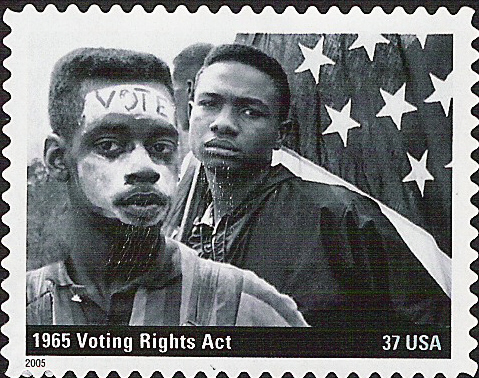
I'm very sensitive about voting rights. Perhaps it is because I remember relatives who could not vote because of poll taxes, literacy tests and other games that were totally legal before 1964, and survived out in the countryside into well into the 1970s.

Because I am pushing 60, I expect my generation to show some guidance and leadership on this issue. We remember the fight for voting rights firsthand. many of us went to college or spent time in military service in areas where we could not vote locally. We also know first-hand the dangers of having no political power in places where we have to survive.

So, giving some thought to the dangers of dirty tricks, I've got a few suggestions:

1) Talk often to anyone and everyone above the age of 17 about the importance of being registered to vote in time for the primaries in your state, or at least in time for the general election.

2) Understand the rules for franchise reinstatement in your state, and be able to explain them to any friend, relative, or runnin' dawg of your children or grandchildren's who may have had a fall in the past and may not know they could be eligible to have their voting rights restored.

3) Stick voter registration cards (available in most libraries, every department of motor vehicles office, and at your city hall and county courthouse) in the glove compartment or console of every vehicle you own, pay insurance on, or make the payments for. Ladies, get in the habit of carrying a dozen in your purse and men, stick three or four in your pocket because you never know when someone might need one.

4) Talk about politics as much as you talk about sports, reality T-V shows, the latest jam, or who's got the best deal on purses or hair. If you've got a church family, and your pastor is not active in civic affairs, talk about politics over social dinners. Commit to getting people fired up about local, national and world affairs one at a time, and touch different people each week or month to make a difference.

Even if you know you can count on them to vote for your presidential candidate, tell them who is running for Congress or your state legislative district. Tell them why they deserve your votes and tell them why the other guy could cause problems for their families and your neighborhood.

5) Don't accept the negative: Even if you do not say "all politicians are crooks, they are all crooks." Remember that can become an excuse for tuning out the whole process.

We know and remember so many people who voted for bigots and even campaigned for candidates they knew would do absolutely nothing to make their lives better. They did all of that because they knew there were even worse bigots and insensitive SOBs laying in the cut trying to seize as much power as possible.

Family members we respected cast their ballots holding our hands in the voting booths and never talked about the weaknesses of the people they voted for. They did it out of hope for better futures for us and our children. Many of us have known politicians who are not crooks. Consider the danger of accepting the fallacy that they all are.

6) Volunteer: You don't have to walk, or even show up at a phone bank anymore. Commit to sending a dozen e-mails, pass on an issues paper, or spend a few minutes talking to a grandchild and their friends about the importance of participation. Do any of those things and you can chalk them up to honoring the generations that fought and died to make those things possible. 

A friend says I live and breathe politics. That's not exactly true. For many years I dealt with politics as a trained observer. While people speak about the "liberal media," I can tell you that there are thousands of professionals covering politics every day who check their personal opinions at the door each day before they do their jobs. It is never easy, but their livelihoods depend upon watching and listening and reporting only what they observe without shading it in any direction.

I can tell you that lots of dumb things happen during political campaigns. Still, most newspeople do not go out of their ways to derail anybody's aspirations for high office.  I do not live and breathe politics. I just have a good idea of what can happen when people tune out, or fail to tune in early enough to really make a difference.


Sunday, January 22, 2012

The Nation Needs Great Works

"When more and more people are thrown out of work , unemployment results."-- Calvin Coolidge, U.S. President, 1923-1929
 
Those words made headlines in the Roaring Twenties, they were uttered by a committed deregulator in an era when irrational exuberance dominated the mood of investors, large and small.  Did I mention that the quote came shortly before the Wall Street Crash that led to the Great Depression?

(Photo By: Debra Davis-Holly)
I had really good history teachers in school and my love of the subject has helped me during more than 40 years as a journalist. While the technology changes from one era to the next, many of the problems are basically the same.  

Lessons Learned: When you turn the nation's future over to business, you roll the dice with leaders who are only accountable to their major stockholders. If things don't work out, a lot of little people lose out. 
 
Over the next nine months, we will hear a lot about freeing up business to create jobs and put Americans back to work. I'd love to see more jobs and more Americans working, but the people talking about that don't have real track records of creating good, permanent private sector jobs here at home.  
I'm not talking about part-time positions with no benefits, and I am definitely not talking about contract opportunities that pay by the day and leave workers twisting in the wind on taxes, unemployment insurance and healthcare.
 
Yes, lots of people need jobs, but the Great Recession has ended. Banks that were on the ropes are stabilizing and big manufacturing is rebounding. General Motors is once again the number one manufacturer of automobiles,  less than four years after a government bailout. Most of the Troubled Asset Relief Program funds have been paid back, but there's still a lot of work to be done, and much of that work could be projects literally right in your own backyards.

Drive through your community, or most any community in the nation, and you will see the results of bold infrastructure projects begun or completed as a result of public investment with the help of private labor. 

Examples? The interstate Highway System,  most major commercial airports, courthouses, schools, canals, ports, railroads, bridges, tunnels and water and sewage systems.

Photo By: Derrill Holly
When we have not invested in such things, the nation has suffered. When the world economy has stalled, those projects, financed by debt have kept people working and kept the nation moving forward.  They are productive pursuits that reap huge public benefits and tangible results.

Franklin Roosevelt, Dwight Eisenhower, Lyndon Johnson and Bill Clinton were builders. Richard Nixon, Ronald Reagan, Jimmy Carter and two guys named Bush were not.  
 
My conservative friends will note that this is a bipartisan list. It includes visionaries who saw value in using the nation's infrastructure needs to put idle people to work. It also includes a number of "stand patters" who saw no need to modernize. One group looked ahead and the other sought savings that now clearly were not reinvested in the nation's future.

There are obviously no guarantees in life, but if business leaders-- you know, the ones throwing all of  that money into Super PACs-- aren't ready to hire Americans for full-time permanent jobs, I just don't see giving them the reins to the future.

Friday, January 20, 2012

The Great Recession: We Survived

The economic downturn that began in 2007 statistically ended in 2009. While the human suffering and the struggle to recover has continued, somewhere along the line, that two-year period became a defining era.

The Associated Press, arbiters of journalistic style, and the hardest working collective group of 4,500  journalists in the world now refers to the period as the Great Recession. That means it is on a par with other benchmark events of the past 160 years. Those include the Civil War, World War I, the Great Depression and World War II.

When you look around the room take pride in the fact that despite your diminished circumstances, your derailed retirement plans and the assorted boomerang children you may still be harboring, the fact of the matter is that you survived.

Seventy-five years from now, when people start reviewing the personal data of the 2010 U.S. Census, the details of your survival will become more than statistics. It will be part of the historic record and available to anyone who cares to look.

One of my brothers is a retired journalist who has used his talents for genealogical research in recent years. He has been able to look back on census date from 1930 and learn a lot about how my own family weathered the Great Depression.

It turns out that my maternal grandfather once was a member of my maternal grandmother's father's household. While I only knew my grandfather as an old man and great provider, he was once a young man dependent upon his wife's family for his very survival.

It's funny what history and official documents will be able to tell future generations about you and the people in your life. Very few of us will look back upon the Great Recession as "the good old days," but it is likely some of our children will remember it as a time when people of all types rediscovered the meaning of family.

Climbing out of the misery, and slowly watching people we care about find jobs and hope for better futures, some of us can look back at the spiraling collapse of the first decade of the 21st century. As we turn our thoughts to God and all the strength he helped to pull from deep within our souls, we can give thanks, smile inwardly and breathe the fresh breezes of relief.

Confronted with the all too real hardships of the Great Recession, we survived.